
Wellbeing in Literacy Model
Our Theory of Reading Development
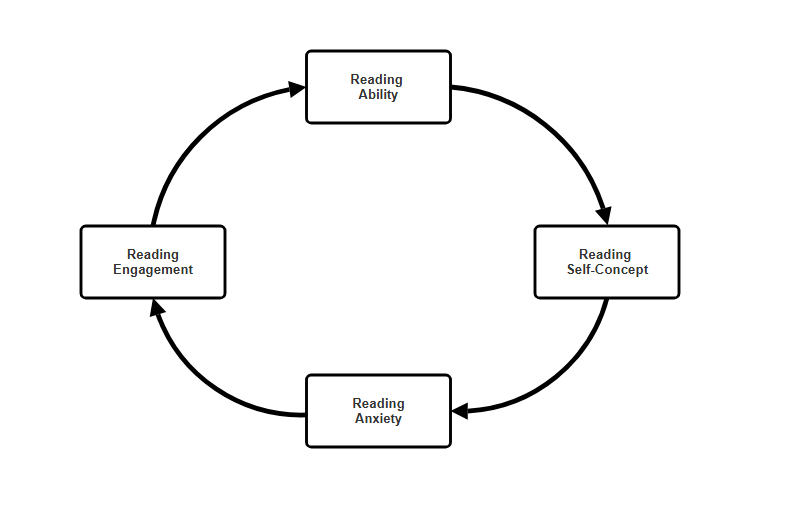
Our Wellbeing in Literacy model is a theory of reading development that consists of four interacting constructs in a feedback cycle: reading ability, reading self-concept, reading anxiety, and reading engagement. This cycle can help explain how children develop literacy, but also importantly, how some children develop reading difficulties.
For example, poor reading ability can undermine a child’s reading self-concept, as repeated experiences of struggle and comparisons with peers impacts their confidence in reading. This diminished self-concept then fuels reading anxiety, as the child comes to associate reading tasks with threat, failure, or embarrassment. That anxiety, in turn, reduces reading engagement, since anxiety can lead children to less likely, approach, persist, or invest effort in reading activities. This reduced engagement further deprives the child of the practice needed to build reading skills and the cycle repeats.
Link to relevant publicaitons, assessment, and interventions?